
SPROXIME 500 Tablets
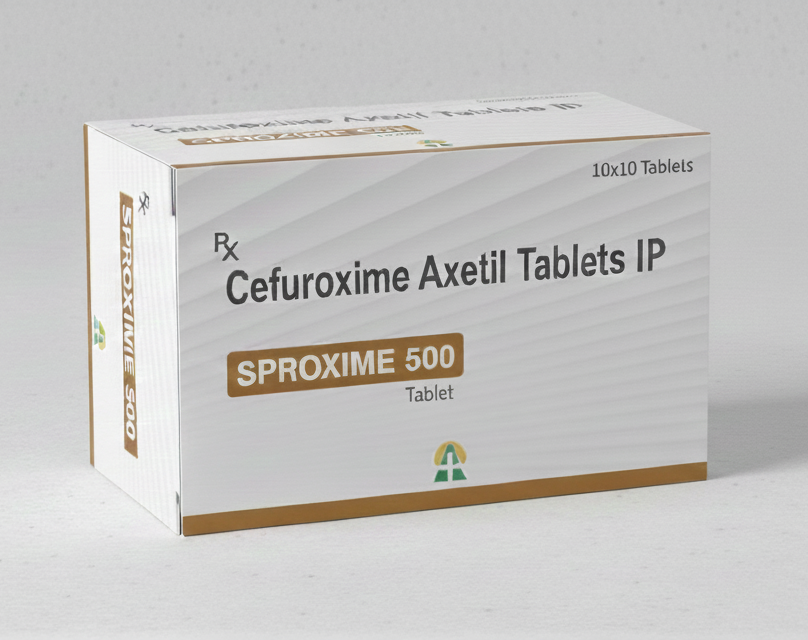
SPROXIME 500 Tablets
Cefuroxime Axetil 500 mg
SPROXIME 500 contains Cefuroxime Axetil 500 mg, a second-generation cephalosporin antibiotic. It works by preventing the formulation of the bacterial protective covering which is essential for the survival of bacteria.
This antibiotic is highly effective against a wide range of gram-positive and gram-negative bacteria and is prescribed for treating infections of the respiratory tract, urinary tract, skin, and soft tissues.
Composition
Each tablet contains:
Cefuroxime Axetil IP eq. to Cefuroxime 500 mg
Category
Antibiotic / Cephalosporin
Packaging
Available in strips of 10 tablets
10 × 10 Alu-Alu packaging
Storage
Store in a cool, dry place
Protect from light and moisture
Keep out of reach of
children
Specifications
Description
- Film-coated tablets
- Broad-spectrum antibiotic activity
- Stable in the presence of beta-lactamases
Pharmacology
- Cefuroxime Axetil: A prodrug of cefuroxime
- Bactericidal action by inhibition of cell wall synthesis
- Effective against resistant strains
Contraindications
- Hypersensitivity to cephalosporins
- History of severe allergic reaction to penicillins
- Consult physician during pregnancy
Therapeutic Indications
Respiratory Infections
Acute bronchitis, pneumonia, and pharyngitis
Skin Infections
Uncomplicated skin and soft tissue infections
Urinary Tract Infections
Pyelonephritis and cystitis caused by susceptible bacteria
Frequently Asked Questions
Take it exactly as prescribed by your doctor. It is usually taken twice daily after meals to increase absorption. Swallow the tablet whole; do not crush or chew.
No, complete the full course of treatment even if you feel better. Stopping early may allow bacteria to continue growing, which may result in a return of the infection.
Common side effects may include nausea, vomiting, diarrhea, or stomach pain. Consult your doctor if these persist or worsen.